A surprising amount of our approach to social change begins after something has already gone wrong.
We provide services after someone has experienced harm. We introduce reforms after institutions fail. We respond to crises once they become impossible to ignore. We create reporting processes for incidents that have already occurred and build safety nets to catch people once they have fallen through the cracks.
All of this work is necessary. People experiencing harm need support, institutions need accountability, and communities need systems capable of responding when things go wrong. But if most of our energy is directed towards dealing with consequences, we can easily neglect another important question: what would it take to prevent those consequences from occurring in the first place?
This question sits at the heart of my conversation with Dr Heena Sinha Cheung, a social impact leader, entrepreneur, advocate and systems thinker whose work spans child safety, disability, responsible AI, community advocacy and politics. While these areas might initially seem disconnected, Heena sees a common thread running through them: designing systems around the people who actually experience them, rather than creating systems first and treating people as an afterthought.
Her work offers a useful starting point for thinking about what it might mean to move from reactive social change towards prevention — and why doing so requires us to listen much more closely to the people who already understand the problems we’re trying to solve.
Prevention Requires Us to Look Upstream
Heena’s commitment to prevention is deeply personal. As a survivor of childhood sexual abuse, she describes spending many years recovering from what she experienced. Becoming a parent eventually prompted her to ask a different question. Rather than focusing only on what happens after a child experiences harm, what could we do to prevent that harm from occurring at all?
That question ultimately contributed to the creation of My Safe Circle, which provides practical tools for parents, caregivers and communities to help protect children both online and offline.
There is a broader lesson here for changemakers.
Reactive interventions tend to focus our attention on the visible manifestation of a problem. Someone becomes homeless, experiences violence, develops an illness, enters the criminal justice system or reaches a crisis point, and an intervention is designed around that moment.
Systems thinking encourages us to look further upstream.
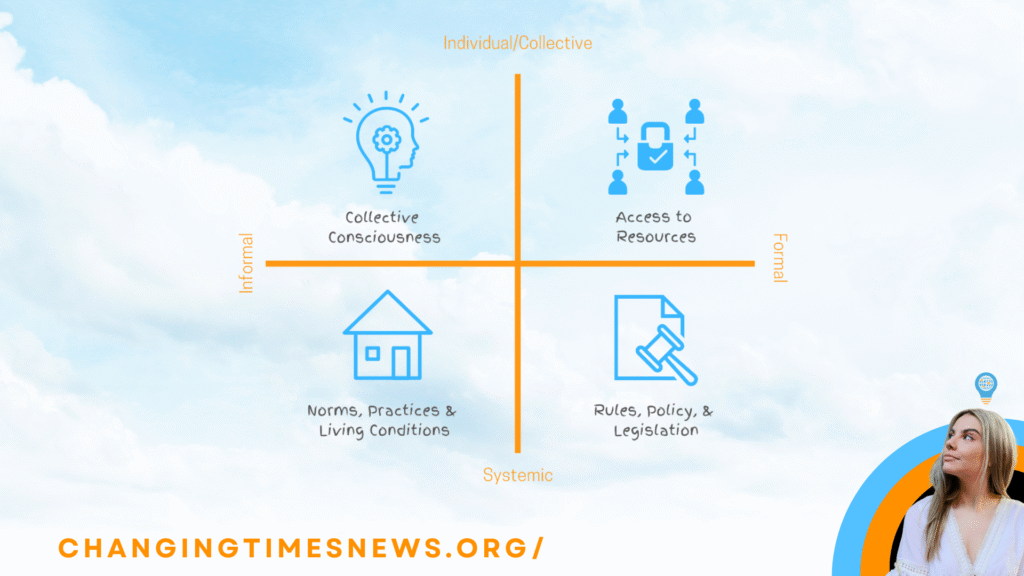
What conditions made that outcome more likely? What warning signs appeared beforehand? What relationships, institutions, policies or cultural norms contributed to it? Where were the earlier opportunities to intervene?
This doesn’t mean abandoning crisis responses. Prevention and response are not mutually exclusive. But it does mean expanding our understanding of intervention so that we’re not continually waiting for harm to become severe enough to demand our attention.
Prevention Often Starts With Paying Attention
One of the simplest ideas to emerge from Heena’s work on child safety is also one of the most important: prevention requires us to notice.
Children may not always possess the language to clearly explain that something inappropriate is happening. They may communicate through changes in behaviour, discomfort around particular people, secrecy, body language or other subtle signals. Heena therefore emphasises the importance of adults learning about abuse, becoming comfortable enough to talk about it, listening to children and noticing changes that might otherwise be dismissed.
She also challenges the familiar idea of “stranger danger”. The risk of harm cannot be understood simply by teaching children to fear unknown people. Child safety also requires age-appropriate conversations about boundaries, safe adults, secrets, touch and the physical sensations children might experience when something doesn’t feel right. The aim is not to make children frightened of the world, but to give them the vocabulary and relationships they need to communicate discomfort when it arises.
There is an important principle here that extends beyond child safety: early intervention depends on our capacity to recognise weak signals before they become obvious problems.
We can apply the same thinking to organisations, communities and social systems. What are people telling us before they disengage entirely? What small patterns are emerging before they become crises? What problems have become so normalised that we no longer notice them?
Preventative systems need mechanisms for noticing and responding to these signals early.
Individual Behaviour Can Only Take Us So Far
There is, however, a potential trap in conversations about prevention. Responsibility can easily become individualised.
If we’re not careful, child safety becomes entirely about what parents should do. Environmental sustainability becomes about what consumers should buy. Public health becomes about individual lifestyle choices. Poverty becomes about financial literacy. Burnout becomes about personal resilience.
Individual action matters, but a systems perspective asks what conditions make those actions easier or harder.
During our conversation, Heena pointed to the capacity constraints faced by schools and community organisations. The problem is not necessarily that people working within these institutions don’t care about safety or lack good intentions. Sometimes the systems surrounding them make acting on those intentions unnecessarily difficult.
A reporting process that requires an exhausted teacher or volunteer to navigate pages of paperwork creates friction between recognising a problem and doing something about it. A community organisation can have a child-safe policy sitting in a folder while still lacking accessible processes for identifying, reporting and following up on potential harm.
This distinction is crucial for changemakers.
When people repeatedly fail to perform a desired behaviour, we can ask why individuals aren’t doing what they’re supposed to do. Or we can examine the environment in which that behaviour is expected to occur.
Sometimes the most powerful intervention isn’t another awareness campaign telling people to care more. It’s redesigning the system so that doing the right thing becomes easier.
Technology Should Create More Space for Human Connection
This question of capacity also shaped one of the more unexpected parts of our conversation: the role of artificial intelligence.
Discussions about AI often become polarised between enthusiasm about efficiency and concern about its social consequences. Heena’s approach through Simple AI is more practical: begin by asking what technology allows people and organisations to spend more of their time doing.
Community organisations, charities and care providers frequently operate under significant administrative and regulatory burdens. Reporting and compliance are important, particularly when organisations are responsible for vulnerable people. But every hour spent duplicating information or completing unnecessary administrative processes is also an hour that cannot be spent doing something else.
Heena argues that AI can be useful when it increases an organisation’s capacity to fulfil the purpose it existed for in the first place. In care organisations, for example, technology might help reduce repetitive administrative work or identify patterns within existing records, freeing people to spend more time working directly with communities.
But efficiency alone doesn’t make technology responsible.
Organisations also need to understand what tools they’re using, where information is being stored, how privacy is protected and whether using a particular system could unintentionally expose someone’s identity or sensitive information.
Perhaps that gives us a better question for assessing technology in social impact organisations. Rather than simply asking, Can AI make us more efficient?, we might ask:
Does this technology increase our capacity to do the human work that matters?
Technology should serve the relationships at the heart of social change, not replace them.
The People Closest to Problems Often Hold Part of the Solution
Another theme connecting Heena’s work is frustration with the distance that can emerge between decision-makers and the communities affected by their decisions.
Social problems are often addressed through institutions divided into sectors and portfolios. Housing is treated separately from family violence. Climate policy is treated separately from gender inequality. Disability services, community development, child safety and economic policy each develop their own professional languages, funding structures and institutional boundaries.
But people’s lives don’t occur in portfolios.
Heena uses systems thinking to emphasise the connections between issues that institutions can easily treat separately. She points, for example, to relationships between homelessness, gender-based violence, migration and stigma, and to the broader social consequences that can accompany climate-related disasters.
This becomes particularly important when we think about expertise.
Communities are full of people who have spent years studying, organising around and directly experiencing the problems policymakers are trying to address. Researchers hold specialised knowledge. Community organisations understand local conditions. People with lived experience understand aspects of systems that may remain invisible to professionals. Grassroots advocates often possess institutional memory accumulated through years of campaigning.
Yet these forms of knowledge do not automatically translate into influence over decisions.
For Heena, this is part of what motivated her decision to stand as an independent political candidate. She argues that genuine community representation requires political leaders to listen to grassroots advocates and bring their knowledge into the rooms where decisions are actually made.
The broader lesson for changemakers is that we may not always need to invent new solutions. Sometimes our challenge is creating better ways of recognising, connecting and activating knowledge that already exists.
Better Systems Require Better Listening
There is a temptation in social change to believe that leadership means having answers.
We celebrate visionary founders, political leaders, experts and innovators who appear capable of identifying a problem and presenting the solution. But complex social problems rarely belong to a single organisation, discipline or sector, which means no individual can possess the whole picture.
A different model of leadership begins with listening.
Listening to children when their behaviour tells us something isn’t right. Listening to frontline workers when administrative systems prevent them from doing their jobs. Listening to communities when policies fail to reflect local realities. Listening to people with lived experience when they reveal something about a system that isn’t visible from the outside. Listening to researchers and advocates who have spent years developing knowledge that decision-makers may overlook.
This isn’t simply about being inclusive. It is about designing better interventions.
If systems are interconnected, then knowledge about those systems is inevitably distributed. The people experiencing a problem, delivering services, researching its causes, developing alternatives and making policy may each understand different parts of it.
Systems change therefore requires mechanisms capable of bringing those perspectives together.
From Fixing Problems to Designing Better Conditions
The most useful shift from Heena’s work may ultimately be a change in the question we ask.
Instead of waiting until something goes wrong and asking, How do we fix this?, we can ask earlier:
What conditions would make this harm less likely to occur in the first place?
That question can be applied almost anywhere.
In child safety, it might mean giving children language around boundaries, equipping adults to recognise early signs of harm and making reporting mechanisms accessible.
In community organisations, it might mean reducing administrative burdens so people have greater capacity to work directly with their communities.
In technology, it might mean designing AI around human needs, privacy and social purpose rather than adopting tools simply because they promise efficiency.
In politics, it might mean bringing grassroots knowledge and community voices into decision-making before policies are designed rather than consulting people once the major decisions have already been made.
None of this eliminates the need to respond when harm occurs. But it changes where we direct our attention.
And perhaps that is one of the most important contributions systems thinking can make to social change. It encourages us to stop seeing problems only at the point where they become visible and instead examine the relationships, structures and conditions through which those outcomes emerge.
Because the goal shouldn’t simply be to become better at repairing broken systems.
It should also be to create systems that are less likely to break people in the first place.