When people think about the creative industries, they tend to think about what is visible.
They think about the fashion campaign, the immersive brand activation, the film set, the TV studio, the festival installation, the exhibition stand, the Christmas window display, the theatre production. They think about creativity at its most exciting: bold ideas made physical, temporary worlds built to surprise, delight, and communicate something memorable.
What people do not often think about is what happens next.
What happens to the set after the final shoot?
What happens to the props after the series wraps?
What happens to the towering event installation after the conference closes?
What happens to the window display after the season changes?
Too often, the answer is simple: it goes into storage, into a skip, or into landfill.
This is the hidden waste problem inside the creative industries — and it is far bigger than most people realise.
The waste built into creativity
Across film, television, retail, live events, exhibitions, fashion, and brand experiences, huge amounts of material are created for short bursts of time. These may be custom-built pieces, scenic elements, display units, signage, furniture, fabricated structures, props, costumes, plinths, branded counters, or one-off decorative elements.
They are often made to a high standard. They may have taken weeks or months to design and fabricate. They may have involved enormous budgets, highly skilled labour, and careful art direction.
And then, once the production ends or the campaign comes down, they become a problem.
There is often no clear system for reuse. Teams are under pressure to move quickly onto the next job. Warehousing is expensive. Listing items individually takes time. Different sectors do not necessarily talk to one another. And because the default mindset is still largely linear — design, build, use, discard — many valuable assets are treated as disposable.
This creates a strange contradiction at the heart of the creative industries. Some of the most imaginative sectors in the economy are still operating within deeply unimaginative systems when it comes to materials.
Circularity is not the enemy of creativity
One of the most important points raised in this conversation is that circularity does not have to diminish creativity. In fact, it can expand it.
There is a common assumption that if something is reused, repurposed, or sourced second-hand, it will somehow be less exciting, less bespoke, or less high-end. That assumption is rooted in a very narrow understanding of design.
Creativity is not the same as constant novelty.
The ability to work with what already exists, to see possibility where others see waste, and to build something fresh from existing materials is also a creative act. In many ways, it is a more demanding one. It requires imagination, adaptability, and a willingness to think beyond the default of making everything from scratch.
And in a world facing ecological breakdown, resource depletion, and rising costs, that kind of creativity is not a compromise. It is a necessity.
The economics of circular design
There is another myth that needs challenging: the idea that sustainability always costs more.
In many industries, sustainability is still treated as an optional extra or a values-based add-on. It is something businesses do if they can afford it, not something embedded in the basic logic of how the sector works.
But in the case of circular design, reuse, and repurposing, the economics can work in the opposite direction.
If a company can source a high-quality installation, prop, display unit, or scenic element that has already been built, it may save both time and money. It avoids the cost of designing from scratch, the cost of fabrication, the cost of new materials, and often the long lead times that come with custom production. On the other end, the original owner avoids disposal costs, clears storage, and may recover some of the original investment.
That is not simply a sustainability win. It is a business win.
This matters because one of the fastest ways to drive change is to show that the circular option is not only more responsible, but more practical.
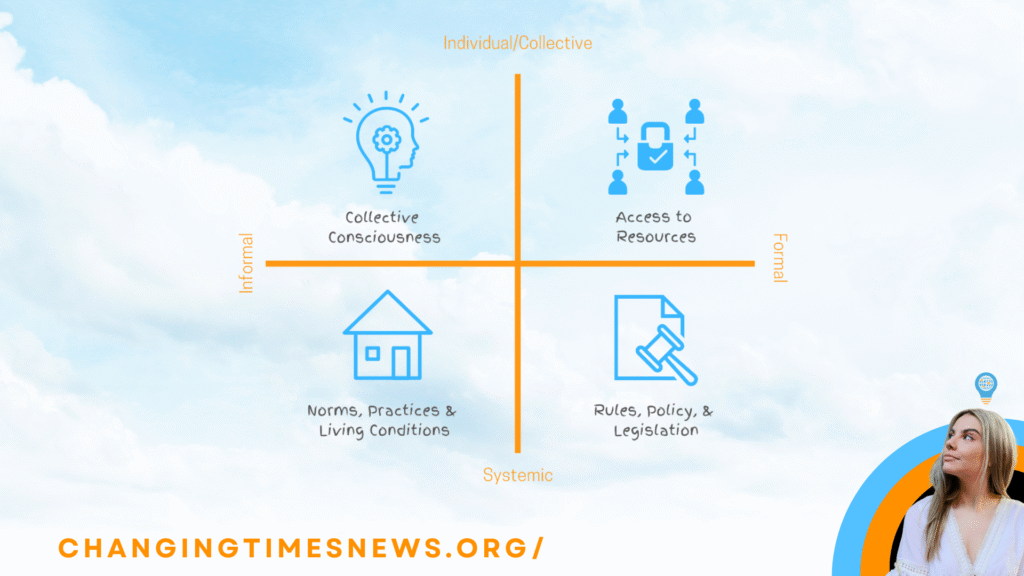
The problem is systemic, not individual
It would be easy to look at this issue and blame individual designers, art directors, producers, or event teams. But that would miss the point.
The problem is systemic.
Many people working in the creative industries already know the waste is excessive. They already feel uncomfortable about it. They already want better options. The issue is that the systems around them often make it hard to choose differently.
Deadlines are tight. Budgets are pressured. Teams are overstretched. Productions move fast. Clients want impact. And once the work is done, there is rarely time built into the process to find second lives for everything that was made.
This is why platforms, infrastructure, and better systems matter so much. If circularity depends entirely on individuals going above and beyond in their spare time, it will remain marginal. But if reuse becomes easy, visible, and integrated into the workflow, then the culture can begin to shift.
Change becomes possible when the better option is also the more accessible one.
Storage is not the same as reuse
Another useful distinction in this conversation is the difference between storing something and actually keeping it in circulation.
In many creative industries, items do not go straight to landfill. They go into storage “for later”. On the surface, that can sound like a more responsible option. But in practice, it often becomes a kind of slow disappearance.
The items sit in a warehouse. Staff change over. Records get lost. The original purpose is forgotten. The cost of storage accumulates. Eventually, the items may still be thrown away — just later, and often with even less visibility.
Storage can sometimes function like a waiting room for landfill.
A genuinely circular system needs more than good intentions. It needs visibility, inventory, discoverability, and connections between those who have something and those who might use it next.
One industry’s waste is another industry’s resource
A particularly exciting idea here is that different creative sectors do not have to remain siloed.
A film set built for a Christmas advert may contain elements useful to a small retailer preparing a seasonal display. A branded installation from a conference may be repurposed by an independent venue, gallery, studio, or shop. Props from a production could find new life in theatre, education, events, hospitality, or even private interiors.
When materials move across sectors rather than staying locked inside one industry, the possibilities multiply.
This is one of the most promising aspects of a circular model: it starts to reveal that waste is often just a failure of connection. The object itself may still have value, beauty, and function. What is missing is the pathway that allows it to move to where it is needed next.
Changing the mindset from scratch to source
Ultimately, one of the biggest barriers is cultural.
For decades, many parts of the creative industries have operated with the assumption that every brief begins with a blank page. The expectation is that the team will generate a new concept, new materials, new fabrication, new production, and new build, even if something similar already exists elsewhere.
A circular mindset asks a different first question.
Not: what can we make?
But: what already exists that we can work with?
That is a profound shift.
It does not mean abandoning originality. It means beginning from a different starting point — one shaped by curiosity, responsibility, and resourcefulness.
In a linear model, materials are subordinate to the idea. In a circular model, the idea is in dialogue with materials, context, and future use.
That is not only better for the planet. It can also lead to more layered, inventive, and surprising creative outcomes.
Technology can help — if it serves circularity
There is also an interesting tension here around technology.
On the one hand, digital systems and online marketplaces can make reuse far easier by improving visibility and logistics. Inventory tools, digital warehousing, and AI-assisted listing processes can reduce the friction that often stops materials from being recirculated.
On the other hand, technology is only useful if it supports the right goals.
The point is not to automate waste more efficiently. The point is to create tools that help creative assets stay in use, reduce unnecessary production, and make circularity practical at scale.
If technology can remove the administrative barriers that stop people from reusing what already exists, then it becomes an enabler of systemic change.
The return of repair, craft, and material care
There is another important possibility embedded in this shift: the revival of repair and skilled making.
A circular creative economy is not just about selling second-hand items. It is also about restoring, adapting, modifying, upholstering, refinishing, repainting, mending, reconfiguring, and reimagining.
That opens up space for local craftspeople, repair specialists, carpenters, scenic artists, upholsterers, and makers whose work may become increasingly valuable as industries move away from disposability.
In that sense, circularity is not only an environmental strategy. It is also a cultural and economic one. It supports different kinds of jobs, different relationships to materials, and a different understanding of value.
Instead of measuring success by speed and volume alone, it makes room for care, longevity, and skill.
Designing with the afterlife in mind
Perhaps the most important shift of all is this: designing with the end in mind.
What if every creative brief included one more question at the beginning?
What happens to this after?
That question sounds simple, but it has enormous implications. It changes how something is designed, what materials are chosen, whether it is modular, whether it can be disassembled, how it is documented, and whether another life is possible for it beyond the first use.
A truly circular creative economy is not just about rescuing waste after the fact. It is about designing so that waste is less likely to exist in the first place.
And that may be the most exciting creative challenge of all.