We often talk about social change as though it happens through policy reform, public campaigns, or major institutional shifts. And it does. But sometimes the most revealing insights come from people whose work has placed them right at the intersection of harm, vulnerability, power, and accountability.
In a recent episode of Changemaker Q&A, Eric Robinson reflected on an unusual career path: from Baptist pastor to FBI agent. At first glance, those roles seem worlds apart. One is associated with spiritual care, the other with law enforcement and federal investigations. Yet the conversation revealed a surprising continuity between them. Both, in different ways, are about people in crisis. Both require discernment, emotional steadiness, and the ability to show up in difficult situations. And both raise deep questions about what justice actually means in practice.
For changemakers, this conversation offers a useful reminder that justice is never only abstract. It is relational, institutional, and deeply human.
Career shifts do not always move in straight lines
One of the most striking parts of Eric’s story was how unplanned his transition seemed. He did not leave ministry because it was failing externally. In many ways, it was working. People were coming to church, growing in their faith, and engaging in community. But the role was taking a serious toll on him internally. He described carrying the hardships of his congregants so heavily that he experienced stress-related headaches every day for two years.
That detail matters because it shows that career transitions are not always driven by ambition or dissatisfaction in the conventional sense. Sometimes they are driven by the body making clear that the current path is no longer sustainable.
For many changemakers, this will sound familiar. People working in helping professions, activism, advocacy, and community work often reach a point where the issue is not commitment, but capacity. They care deeply, but they cannot keep carrying what they are carrying in the same way.
What makes Eric’s story so useful is that he did not interpret that moment as personal failure. He recognised that he needed a different kind of role, and that finding the right fit mattered. Interestingly, he found FBI work less stressful than ministry, not because the work itself was easy, but because it aligned differently with his temperament. That is an important distinction. Sometimes the “harder” role on paper is actually more sustainable because it fits who you are.
Justice is not the same thing as punishment
Another important thread in the episode was Eric’s perspective on justice. Working in law enforcement did not make him more simplistic in how he understood right and wrong. If anything, it complicated his view in useful ways.
He spoke about how exposure to a wide range of people and situations broadened his understanding of how harm happens. That does not mean excusing harmful behaviour. It means recognising that many people who do terrible things have themselves experienced deep trauma, instability, or neglect. This does not remove accountability, but it does challenge the fantasy that justice is simply about condemning “bad people.”
This is a tension changemakers often have to navigate. It is easy to fall into binaries: victim and perpetrator, innocent and guilty, good and evil. But real life is rarely so clean. Justice work requires systems that can hold accountability without flattening human complexity.
Eric’s comments on people arrested for crimes against children were especially telling. He was clear that such people needed to be removed from the street, but he also rejected the idea that they should be reduced to monsters beyond comprehension. He understood them as human beings who had done serious harm, often while carrying serious harm of their own.
That perspective is uncomfortable, but it is necessary. Without it, justice becomes moral theatre rather than a serious effort to address the conditions that produce harm.
Trust is often built through calm, not force
One of the most valuable insights from the episode was Eric’s emphasis on how trust actually gets built in high-stakes situations. Popular culture often portrays law enforcement as aggressive, confrontational, and loud. The reality he described was quite different.
By the time someone is being arrested, the authority of the situation is already clear. The officers are present, the warrant exists, and control has already been established. What matters next is often not intimidation, but de-escalation. Eric spoke about calming people down, treating them with kindness, and helping them understand what would happen next. That was not only humane; it was often effective.
This has obvious implications beyond policing. Changemakers frequently work in emotionally charged environments where people are frightened, defensive, ashamed, or overwhelmed. In those contexts, force rarely produces trust. Calm does. Clear communication does. Respect does.
This was especially evident in Eric’s discussion of working with teenage girls involved in prostitution and exploitation. These were young people who had often only encountered adults as sources of harm, control, or abandonment. Building trust in those circumstances was not quick. It involved repeated contact, consistency, and the gradual realisation that someone was trying to help rather than exploit.
For changemakers, this reinforces an important point: trust is not built because your intentions are good. It is built because your conduct is consistent enough for people to believe your intentions are real.
The stories we tell about exploitation are often wrong
The conversation also challenged some common public narratives about trafficking and exploitation. Eric explained that many people imagine these situations through dramatic abduction stories, where girls are kidnapped from shopping centres and forced into prostitution by strangers. While such cases can happen, he argued that the more common reality is often very different.
Many of the girls he encountered came from fractured homes, lacked meaningful support, and were already trying to survive through the use of their own bodies before older men entered the picture and monetised that exploitation further. In other words, the vulnerability existed before the coercive relationship deepened.
This matters because bad narratives lead to bad interventions. When we focus only on sensational forms of exploitation, we ignore the everyday structural conditions that make people vulnerable in the first place: poverty, neglect, instability, lack of education, lack of care, and lack of viable alternatives.
For changemakers, this is a reminder to look underneath the dramatic headline. Real prevention rarely starts with the final visible crisis. It starts with the quieter conditions that make the crisis possible.
Systems matter, but local relationships still carry enormous weight
A recurring theme in the episode was the importance of local, cross-sector collaboration. Eric spoke positively about the role social workers, juvenile detention staff, and other local actors played in identifying girls at risk and helping intervene earlier. These relationships mattered because they connected law enforcement to care systems and community knowledge.
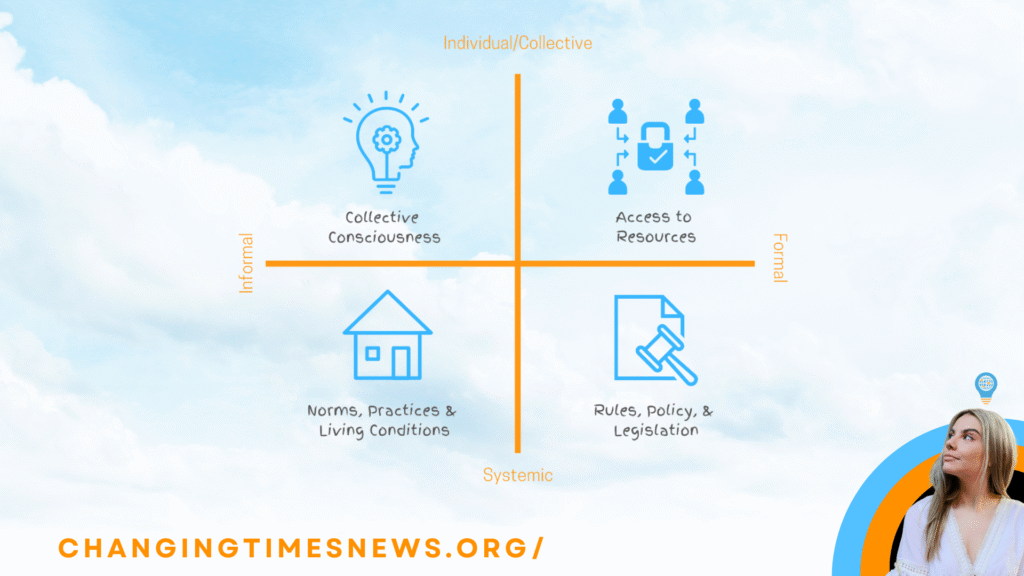
This is one of the clearest takeaways for changemakers. Large-scale reform is important, but systems are not changed by legislation alone. Often, they are changed by improving how people and institutions work together on the ground.
Eric was also realistic about the limits of legislation. Laws matter, but they do not automatically produce justice. Rules can be too broad, too harsh, too weak, or poorly implemented. Real impact often depends on how systems are enacted by actual people in actual places.
That perspective aligns with what many changemakers already know: meaningful change is often hybrid. It needs structural reform, but it also needs relationships, local knowledge, practical coordination, and people willing to do the difficult day-to-day work of support and accountability.
Communities are shaped by exposure, not just ideology
When discussing white nationalism and domestic extremism, Eric made a simple but important observation: many of these worldviews are sustained through isolation and echo chambers. People reinforce one another’s fears and grievances without meaningful contact with those they have been taught to distrust.
Again, this has implications well beyond law enforcement. If hatred is sustained through distance, then contact, exposure, and relationship become part of the solution. That does not mean contact alone can undo extremism, nor does it mean all dialogue is safe or useful. But it does remind us that communities fracture when people lose opportunities to encounter one another as human beings rather than abstractions.
Changemakers working in polarised environments can take something from this. It is not enough to challenge harmful beliefs only at the level of ideas. Sometimes the deeper issue is social separation: who gets to know whom, who remains invisible to whom, and which stories are allowed to substitute for lived relationship.
Service can take many forms
Perhaps the most compelling part of the conversation was Eric’s sense that both ministry and FBI work were, in different ways, forms of service. In one role, he was helping people spiritually and relationally. In the other, he was helping create accountability, safety, and a pathway toward justice.
This is an important reminder for anyone working in the impact space. There is often a temptation to rank forms of service morally: direct care versus advocacy, grassroots work versus institutional work, humanitarian action versus systems change. But the conversation suggests a more useful approach. Different roles can contribute differently, and people need to find the form of service that fits their capacities, convictions, and strengths.
What matters is not whether a role looks obviously “good” from the outside, but whether it is undertaken with integrity, care, and a clear commitment to human dignity.
What changemakers can take from this conversation
This episode offered more than an interesting life story. It opened up several practical insights for anyone trying to create change.
First, the right role is not always the most obvious one. Sometimes sustainability depends less on status or mission and more on fit.
Second, justice work requires nuance. If we want accountability without dehumanisation, we need to resist simplistic moral narratives.
Third, trust is built through consistency, respect, and calm presence, especially when working with people who have every reason to distrust institutions.
Fourth, exploitative systems often rely on pre-existing vulnerability. Prevention must therefore address those underlying conditions rather than only the most visible expressions of harm.
Fifth, local collaboration matters. Some of the most effective interventions happen when law enforcement, social services, and community actors work together with shared awareness.
And finally, service is broader than we often admit. People may contribute through direct care, public leadership, institutional roles, advocacy, protection, or practical support. The challenge is to do that work in a way that is ethical, grounded, and responsive to the real conditions people are living in.
That may be the clearest lesson from Eric’s journey. The path from pastor to FBI agent may seem unusual, but underneath it sits a very familiar changemaker question: where can I do the most good, in a way that I can actually sustain?
Sometimes answering that question changes everything.