When life shifts into overdrive, many of us brace for burnout. But for changemaker and entrepreneur Tiyana J, a recent six-week whirlwind of full-time work, program launches, and leadership responsibilities didn’t end in collapse — it ended with energy to spare. The latest episode of Changemaker Q&A explores how she navigated that period, and offers lessons for anyone facing a similarly intense stretch.
The Landscape: Why This Was a “Burnout Risk” Period
Burnout is more than just being tired. It’s a prolonged state of physical, emotional, and mental exhaustion, often accompanied by cynicism, diminished capacity, and the loss of joy in things that used to matter. Research reminds us that chronic stress without sufficient recovery can lead to long-term health and productivity declines. MDPI+1
Tiyana’s six weeks were unusually demanding: she began a full-time job with intensive training; simultaneously launched her new course through the School of Social Impact; managed her Humanitarian Change Makers network; stayed on the conference organizing committee; and worked a one‐day internship on weekends. Her waking hours stretched from 7:00 am to 6:00 pm (or longer), with barely a moment for pause.
Rather than treating this as a “normal” phase of life, she treated it as a sprint — something to be survived strategically, not indefinitely sustained.
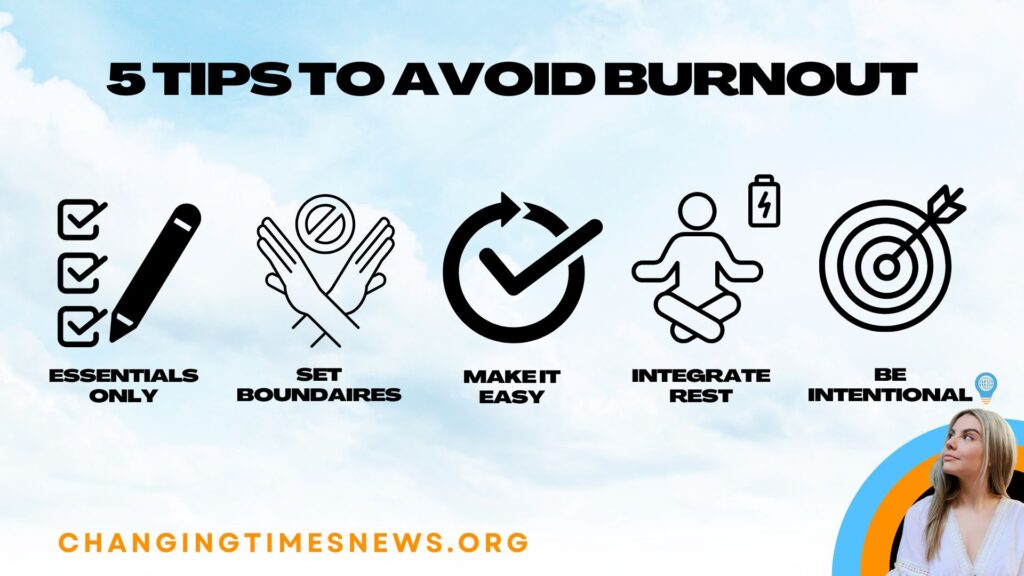
Five Strategies That Made the Difference
Drill Down to the Essentials
Before the sprint began, Tiyana mapped out what truly had to happen. She asked: which tasks would make or break her goals? She opted out of non-critical commitments — for example, she stepped back from strategic committee meetings and paused less essential content work for her network. The only work she fully maintained was the launch of her Systems Thinking course and core student engagement.
Set Boundaries — and Hold to Them
Rather than treating boundaries as “nice ideals,” she framed them as non-negotiables.
- Every night: washing up, packing lunch, and preparing for the next day before bed.
- No weeknight stays at her partner’s place.
- Waking at 3:45 am (no snooze), having a shot of espresso, and either working or returning to sleep until 4:15 am.
- A morning Pilates class at 5:15 am (when no interviews were scheduled).
Make It Easy on Yourself
Tiny friction points were removed wherever possible. For example:
- She prepped all launch content in advance (emails scheduled, social media content lined up).
- She used a slow cooker and rice cooker to simplify evening meals.
- She went to bed in activewear so she didn’t waste time choosing outfits.
- She froze crumpets for quick morning snacks.
Integrate Rest Into the Day
Even in a high-output phase, Tiyana insisted on recovery:
- No device or email checking on her lunch breaks.
- A strict lights-out by 8:30 pm policy (ideally in activewear).
- Sunday evenings reserved for early rest and mental decompression after grocery shopping.
- Moments on her morning commute to simply close her eyes and rest — no podcasts or news.
And experts argue that without recovery, fatigue compounds, decreasing productivity and raising burnout risk. CCL
Be Intentional About What You Let In
During her six-week sprint, Tiyana limited exposure to distressing news and frictional social media. She compared it to driving a road trip: you don’t have to stay tuned to every station you dislike — you can switch. She curated what she consumed, only engaging when it aligned with her values or purpose. This “control over what you tune into” became a protective buffer against cognitive and emotional overload.
Outcomes & Perspective
Now that the sprint is behind her, Tiyana reports she feels strong — not depleted. Her part-time schedule now includes two days off (with Saturday still committed to the internship), but she finds she still wakes early out of habit. From her vantage point, she didn’t enter the six weeks flat-out and collapse — she entered with intention, discipline, and rest woven in.
She makes the caveat that none of this should be seen as a permanent lifestyle. Burnout prevention is not about pushing harder indefinitely — it’s about managing shorter stretches of intensity. If you’re about to enter a heavy period, she advises starting with just one or two of these principles and applying them as steadily as possible.