One of the most common assumptions about modern society is that cultural change is now happening at unprecedented speed.
Every day, new conversations emerge online. Public opinion appears to shift overnight. Social media trends move rapidly, political discourse changes constantly, and younger generations often seem to navigate entirely different moral and cultural landscapes from those that existed even a decade ago.
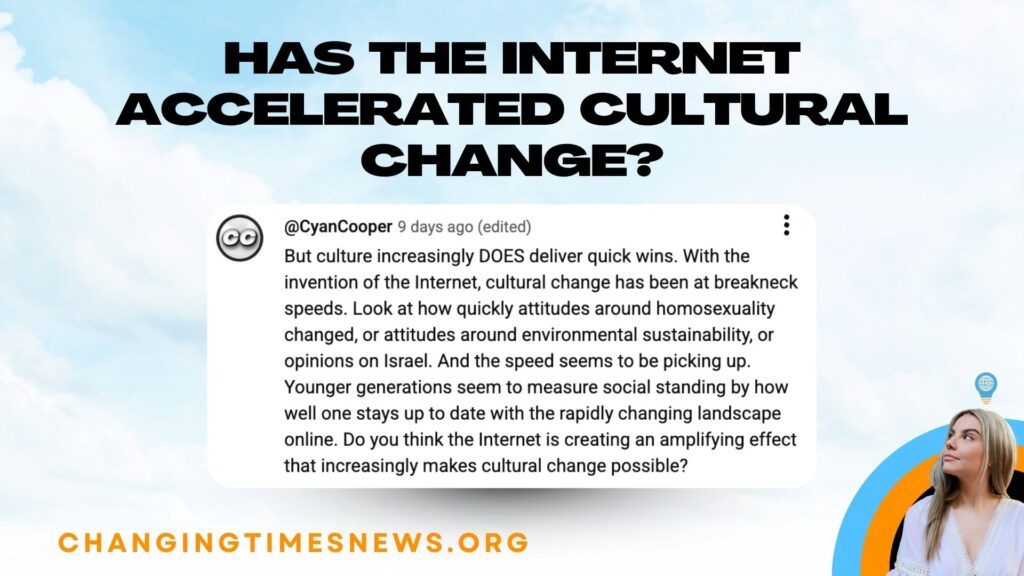
From changing attitudes toward sexuality and gender to debates around sustainability, identity, and global politics, it can feel as though culture itself is accelerating.
But is culture actually changing more quickly? Or are we simply seeing opinions become more visible and more volatile?
The answer requires us to think more carefully about what culture actually is, how societies change, and what role the internet is really playing in all of this.
Culture Is More Than Public Opinion
When we talk about culture, we often reduce it to visible debates or social trends. But culture is much deeper than that.
Culture includes:
- values,
- social norms,
- worldviews,
- beliefs,
- attitudes,
- symbols,
- rituals,
- language,
- and the shared assumptions that shape how societies make meaning.
It is the invisible framework through which people understand what is considered normal, moral, desirable, acceptable, or possible.
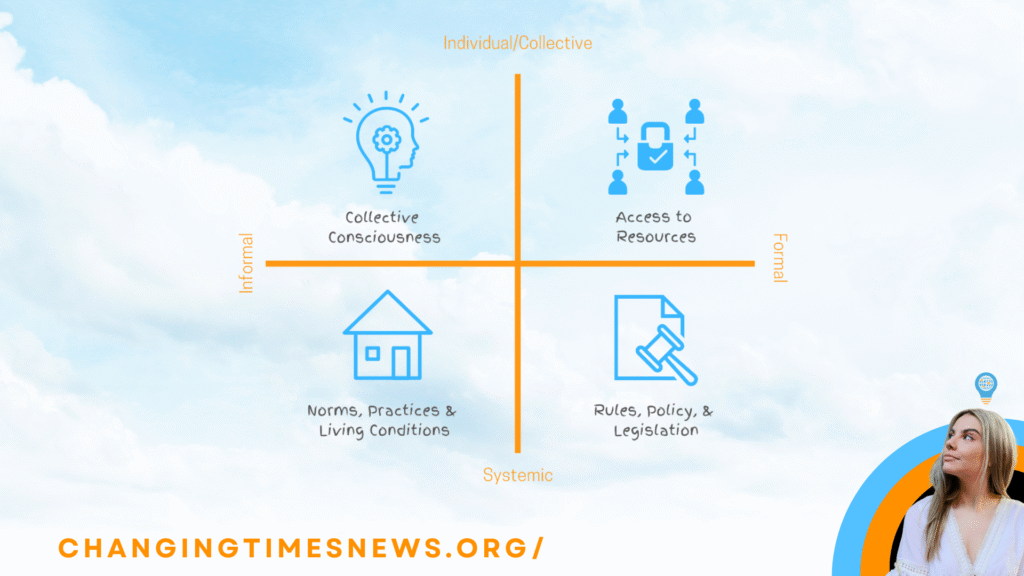
Importantly, culture does not exist separately from society. It is embedded within both people and institutions.
Our laws, education systems, economic structures, workplaces, bureaucracies, and political systems all reflect cultural assumptions. At the same time, individuals internalize culture through family, community, media, religion, and everyday social life.
This is why cultural change matters so deeply for social transformation. Lasting societal change rarely occurs through policy alone. Policies can change relatively quickly, but unless deeper cultural values and assumptions shift alongside them, those changes often remain fragile.
The Internet Has Changed Visibility More Than Values
The internet has undeniably transformed how quickly information moves.
Ideas now circulate globally within minutes. Marginalized voices can find platforms more easily. People are exposed to perspectives they may never have encountered within their local communities or institutions.
This creates the impression that culture itself is moving faster than ever before.
But there is an important distinction between visibility and transformation.
What the internet accelerates most effectively is the speed at which opinions become visible and spread. Social media platforms amplify reactions, narratives, outrage, identity signalling, and emotionally charged content because those things generate engagement.
As a result, we become exposed to far more opinions than previous generations ever encountered.
That does not necessarily mean deeper cultural transformation is occurring at the same pace.
Opinions Change Faster Than Values
One useful way to think about this is through an iceberg model of culture.
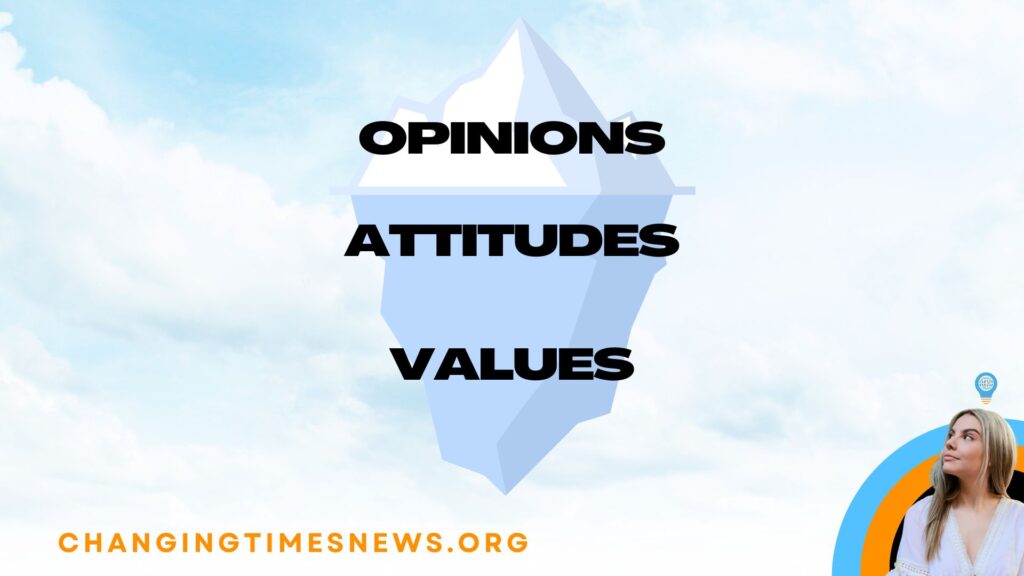
At the surface level are opinions. These are our views about particular issues, events, or debates. Opinions can change very quickly when people encounter new information or social pressure.
Beneath opinions sit attitudes. These are broader orientations toward aspects of social life, such as politics, institutions, social groups, work, or environmental responsibility.
Deeper still are values. Values shape what people believe is morally important or fundamentally worthwhile. They influence how people interpret the world and often remain relatively stable across long periods of time.
At the deepest level are worldviews: the foundational assumptions people hold about reality, human nature, meaning, and society itself.
The internet is exceptionally effective at influencing the surface layers of this iceberg. It can rapidly shift opinions by exposing people to new narratives, emotional reactions, or viral moments.
But deeper changes in values and worldviews typically happen much more slowly.
This is why many online shifts can feel intense and transformative while remaining surprisingly unstable over time.
People may publicly adopt a position, change their language, or align with a trend, but without deeper shifts in values, those changes may not endure once social pressure changes or opposing narratives emerge.
Why Fast Cultural Change Can Feel Destabilizing
There is another important tension here.
Culture is not only a mechanism for transformation. It is also a stabilizing force within society.
Shared norms, rituals, and values help create social coherence. They provide predictability, identity, and a sense of belonging.
Without some degree of cultural stability, societies struggle to maintain trust and continuity. People need relatively stable frameworks to make sense of the world around them.
This means that while cultural evolution is necessary, constant rapid shifts can also create confusion, fragmentation, and anxiety.
The internet intensifies this dynamic because online environments often reward novelty, outrage, and constant adaptation. Many people feel pressure to stay continuously updated on rapidly evolving social expectations, political language, and cultural debates.
As a result, culture can begin to feel less like a shared foundation and more like a constantly shifting terrain.
Social Media Amplifies Extremes
Another reason cultural change can appear faster online is because algorithms amplify visibility unevenly.
Content that provokes strong emotional reactions tends to spread more rapidly. Extreme opinions often receive disproportionate attention because they generate engagement.
This creates a distorted perception of public opinion.
People begin to assume certain views are becoming dominant simply because they encounter them frequently online. In reality, many of these views may still represent relatively small groups whose visibility has been amplified by digital platforms.
The internet has not only changed communication. It has changed the perception of consensus itself.
Real Cultural Transformation Still Takes Time
None of this means the internet is irrelevant to social change. Quite the opposite.
Digital platforms have become powerful tools for awareness, mobilization, storytelling, and collective action. They can accelerate conversations that previously may have remained invisible for decades.
But deeper societal transformation still requires more than visibility.
It requires changes in:
- institutions,
- education,
- relationships,
- values,
- collective meaning-making,
- and the structures through which society reproduces itself over time.
That kind of transformation rarely happens overnight.
Culture changes slowly because it is deeply embedded within both human beings and the systems they inhabit. And in many ways, that slowness is important. It allows societies time to process, negotiate, and integrate change rather than simply react to it.
For changemakers, this creates an important reminder: not all rapid visibility represents lasting transformation.
Social media can create momentum. It can spark conversations. It can expose injustice and connect communities.
But enduring change still requires the slower work of reshaping values, relationships, institutions, and the stories societies tell about themselves.
That work has never been fast. And despite the internet, it probably still isn’t.